
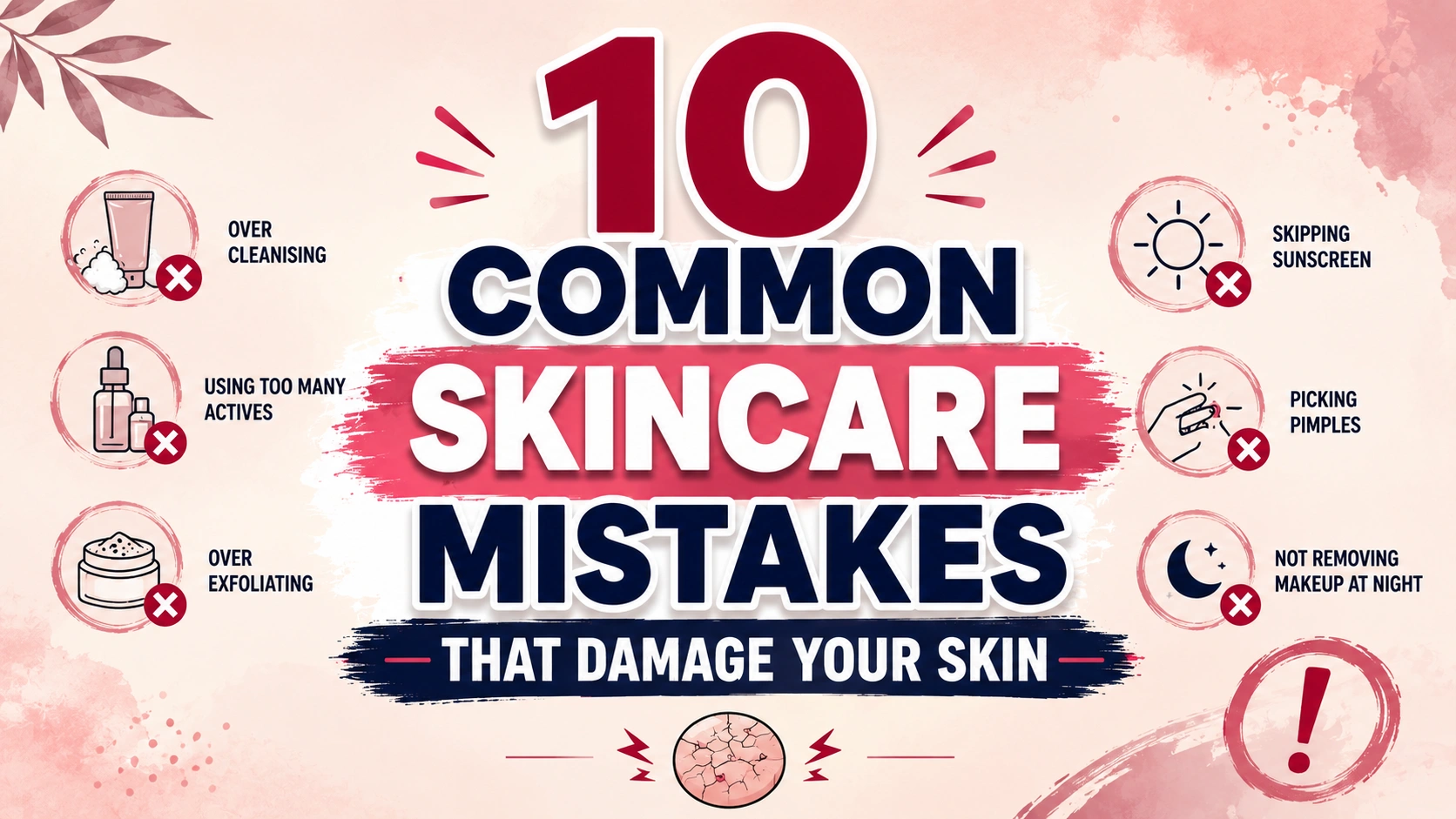
Healthy skin is not achieved by buying the most expensive serum or following every skincare trend on social media. In reality, the biggest difference between glowing skin and problematic skin often comes down to avoiding simple daily habits that quietly damage your skin over time. Many people spend thousands on skincare products yet continue dealing with acne, dullness, dryness, pigmentation, or irritation because their routine contains mistakes they don’t even realize they’re making.
These skincare mistakes that damage your skin gradually weaken your skin barrier, making it harder for your skin to protect itself from pollution, UV rays, bacteria, and moisture loss. Once the barrier becomes compromised, even high-quality products may fail to deliver results. If you’ve ever wondered “Why is my skin so bad even though I take care of it?”, the answer may not be your products—it could be your skincare habits.
In this guide, we’ll explore the 10 common mistakes in skincare that dermatologists frequently see, explain why they happen, and discuss simple ways to build a healthier routine. You’ll also discover some of the best products for skincare that can support your skin without overwhelming it.
Why Your Everyday Habits Matter More Than Expensive Products
Your skin renews itself every day. During this process, it depends on a healthy protective barrier made of natural oils, ceramides, and skin cells. This barrier locks in hydration while keeping harmful bacteria, allergens, and environmental pollutants out.
Unfortunately, many everyday habits slowly weaken this natural defense. Overwashing your face, skipping sunscreen, experimenting with multiple active ingredients, or touching your face repeatedly may seem harmless, but together they create the perfect environment for irritation, dehydration, and breakouts.
These are exactly the kinds of dermatologist skincare mistakes that damage your skin because they interfere with your skin’s natural healing process. Instead of constantly changing products, focus on correcting these habits first. You’ll often notice healthier skin long before purchasing another expensive serum.
1. Cleansing Too Much—or Not Enough
Cleansing is one of the most important steps in every skincare routine, but many people get it wrong. Some people wash their face four or five times a day, believing cleaner skin means fewer pimples. Others only wash their face at night or skip cleansing after sweating.
Both habits can damage your skin. Over-cleansing strips away your skin’s natural oils, causing dryness, irritation, and increased oil production. Ironically, your skin may become oilier because it tries to compensate for the lost moisture. Under-cleansing allows dirt, sunscreen, makeup, sweat, and pollution to remain on your skin, clogging pores and encouraging acne-causing bacteria.
Signs You’re Cleansing Incorrectly
- Tight skin after washing
- Excessive oil within a few hours
- Dry patches around the nose
- Persistent breakouts
- Redness after cleansing
Choosing a gentle cleanser suited to your skin type makes a huge difference. For oily or acne-prone skin, La Roche-Posay Effaclar Purifying Foaming Gel removes excess oil without making your skin feel stripped. If your skin is sensitive, La Roche-Posay Toleriane Purifying Foaming Cleanser gently removes impurities while helping maintain your skin barrier. Remember that cleansing should leave your skin feeling refreshed—not squeaky clean.
2. Skipping Moisturizer Because Your Skin Feels Oily
One of the biggest myths in skincare is that oily skin doesn’t need moisturizer. In fact, oily skin can still be dehydrated. When your skin lacks water, it often responds by producing even more oil. This extra oil mixes with dead skin cells and bacteria, increasing the chances of clogged pores and acne.
Many people asking “Why is my acne getting worse even though I do skincare?” unknowingly skip moisturizer, making their skin produce even more sebum. Using a lightweight moisturizer helps restore hydration without making your skin greasy. Some excellent options include:
- La Roche-Posay Toleriane Double Repair Face Moisturizer
- Vanicream Lite Lotion with Pump
- Dr. Althea 345 Relief Cream
These moisturizers help strengthen your skin barrier while providing long-lasting hydration suitable for daily use.
3. Not Wearing Sunscreen Every Single Day
Among all skincare mistakes that damage your skin, skipping sunscreen is perhaps the most harmful. Many people only wear sunscreen during vacations or sunny days. However, UV rays penetrate clouds and even pass through windows, meaning your skin is exposed almost every day.
Daily sun exposure accelerates:
- Premature wrinkles
- Pigmentation
- Uneven skin tone
- Fine lines
- Loss of collagen
- Sunspots
Even the best skincare products cannot fully repair continuous UV damage. A broad-spectrum sunscreen should always be the final step in your morning skincare routine.
If you have oily skin, La Roche-Posay Anthelios Sunscreen UVMUNE400 Oil Control Gel Cream SPF50+ provides lightweight protection with a matte finish. For most skin types, La Roche-Posay Anthelios Sunscreen UVMUNE400 Invisible Fluid SPF50 offers excellent protection while feeling almost weightless. Daily sunscreen is one of the easiest investments you can make for healthy skin in the future.
4. Mixing Too Many Active Ingredients Together
Modern skincare offers countless active ingredients like retinol, vitamin C, niacinamide, glycolic acid, salicylic acid, and benzoyl peroxide.
While each ingredient has benefits, using too many together often leads to irritation instead of improvement. Many people believe layering several treatment products will produce faster results. Unfortunately, the opposite usually happens. Your skin becomes inflamed, red, flaky, and more sensitive. Instead of introducing five new products at once, add only one active ingredient every few weeks. This allows your skin to adapt while making it easier to identify which product works for you.
If pigmentation is your primary concern, La Roche-Posay Mela B3 Anti-Dark Spot Serum can be introduced gradually. To support overnight skin repair, CeraVe Skin Renewing Night Cream helps replenish moisture while strengthening your skin barrier.
Ingredient Combinations to Avoid
- Retinol + strong exfoliating acids
- Multiple exfoliants together
- Benzoyl peroxide + retinol during the same routine (initially)
- Too many acids layered together
- Starting several new products in one week
A simple routine almost always performs better than an overloaded one.
5. Picking Pimples Instead of Letting Them Heal
Almost everyone has been tempted to squeeze a pimple before an important event. Unfortunately, this habit causes far more damage than the original breakout. Picking pimples pushes bacteria deeper into the skin, increases inflammation, delays healing, and significantly raises the risk of acne scars and dark marks. This is one reason many people search “How to remove dry pimples on face” after accidentally peeling healing skin from a breakout.
Instead of touching blemishes, allow your skin to heal naturally while maintaining a gentle skincare routine. If irritation develops after acne heals, La Roche-Posay Cicaplast Baume B5 Creme helps calm damaged skin and supports recovery. Meanwhile, La Roche-Posay Effaclar Clarifying Solution can help keep pores clearer when used as directed. Keeping your hands away from your face may seem like a small habit, but it can significantly reduce breakouts over time.
6. Over-Exfoliating Your Skin
Exfoliation removes dead skin cells and helps reveal smoother skin underneath. However, exfoliating too often is one of the 10 common mistakes in skincare that dermatologists repeatedly warn against. Many people mistakenly believe that if exfoliating twice a week is beneficial, then doing it every day must be even better. Unfortunately, excessive exfoliation damages the skin barrier, increases sensitivity, causes redness, and makes your skin more vulnerable to sun damage.
Instead of chasing instant smoothness, exfoliate according to your skin type and allow your skin enough time to recover between treatments. Supporting your routine with a gentle cleanser like La Roche-Posay Lipikar AP+ Gentle Foaming Moisturizing Wash helps maintain hydration while reducing the risk of post-exfoliation dryness. Healthy skin is achieved through consistency—not aggression.