
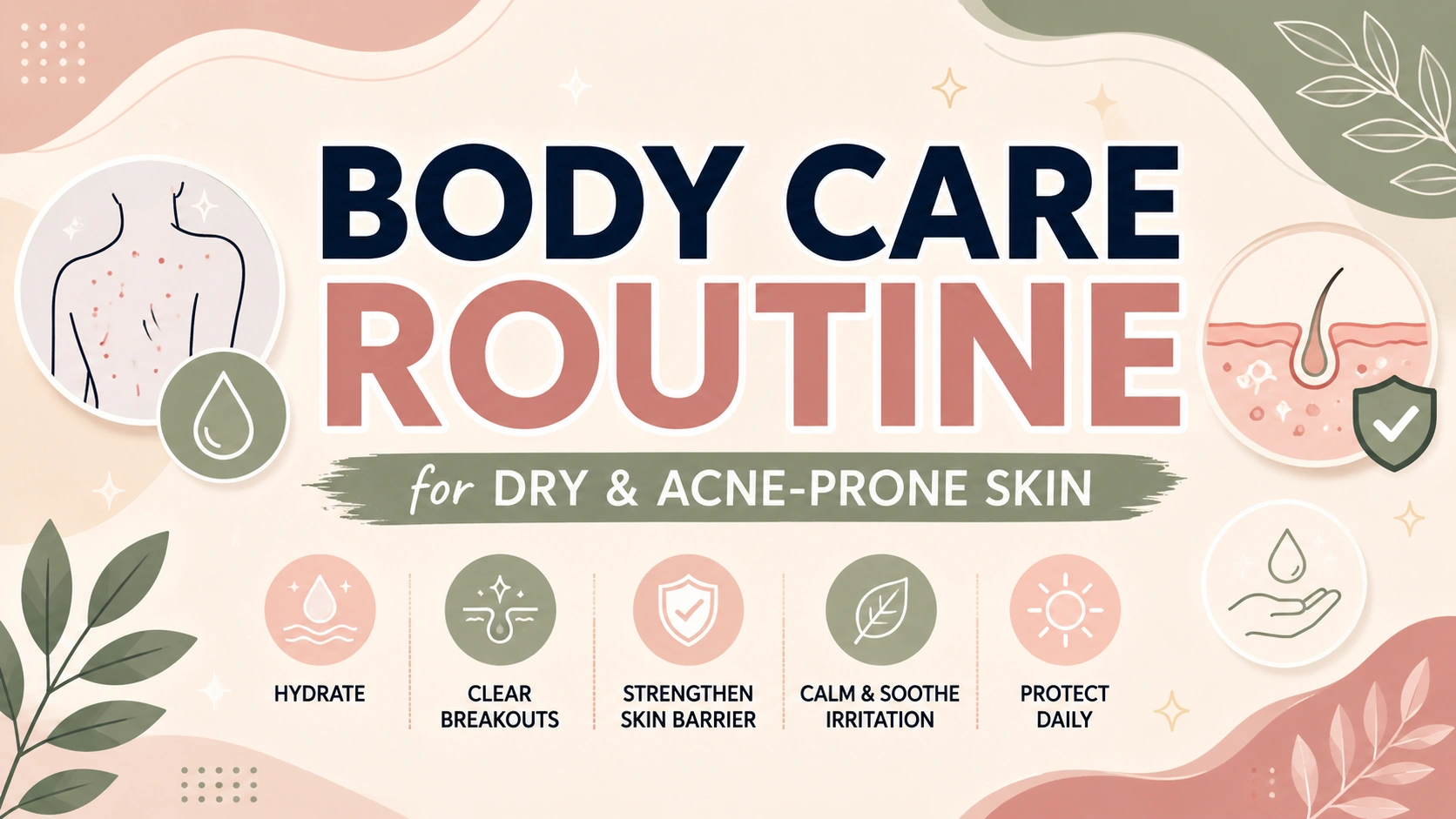
Dryness and acne may seem like two completely different skin concerns, but many people experience both at the same time. If your skin feels tight, flaky, or rough while also developing pimples, clogged pores, or body acne, choosing the right skincare routine can be confusing. Using products that are too harsh may reduce oil temporarily but often make dryness worse. On the other hand, applying heavy creams without considering acne-prone skin can sometimes lead to clogged pores.
The good news is that you do not have to choose between treating dryness and controlling acne. A well-planned body care routine for dry and acne-prone skin focuses on restoring your skin barrier while gently targeting breakouts. Instead of relying on harsh scrubs or drying soaps, the goal is to nourish the skin, reduce inflammation, and keep pores clear with ingredients that work together.
Whether you experience occasional body acne or frequent breakouts on your shoulders, chest, back, or arms, following a consistent routine can make a noticeable difference. Healthy skin is built through daily habits, quality skincare products, and patience. This guide explains everything you need to know to create an effective routine that keeps your skin hydrated, smooth, and clearer over time.
Understanding Body Care Routine for Dry and Acne-Prone Skin
Many people believe acne only affects oily skin, but that is not true. Dry skin can also develop acne because dead skin cells, bacteria, sweat, hormones, and clogged pores contribute to breakouts regardless of skin type.
Dry skin lacks enough natural oils and moisture to maintain a strong protective barrier. When this barrier becomes damaged, the skin loses water quickly and becomes more sensitive to environmental irritants. At the same time, clogged pores can still develop, causing whiteheads, blackheads, and inflamed pimples.
This combination makes skincare slightly more challenging because treatments must address two concerns simultaneously. The ideal dry, acne prone skin routine should hydrate the skin while preventing clogged pores and calming inflammation.
One of the most common questions people ask is, What is the best routine for dry skin and acne? The answer is simple: focus on gentle cleansing, consistent moisturization, targeted acne treatment, and daily sun protection while avoiding products that strip the skin of its natural moisture.
Why Your Skin Barrier Matters?
Your skin barrier acts as your body’s first line of defense. It protects against pollution, bacteria, allergens, and moisture loss. When this barrier becomes weak, your skin feels rough, itchy, flaky, and irritated.
Many acne treatments contain active ingredients that can temporarily increase dryness. If your skin barrier is already damaged, these treatments may cause redness, burning, or peeling instead of improving your skin. A successful body care routine for dry and acne prone skin always starts with repairing and maintaining this protective barrier. Once your skin becomes healthier, it responds much better to acne treatments and heals more efficiently.
Body care routine for dry and acne-prone skin is a way to ensure that you skin barrier remain smooth and glowing. Healthy skin is not created by removing every trace of oil. Instead, it is about maintaining the right balance between hydration and oil control.
Step 1: Cleanse Gently Without Stripping the Skin
Every effective skincare routine begins with cleansing. Throughout the day, your skin collects sweat, dirt, sunscreen, bacteria, excess oil, and environmental pollutants. If these impurities remain on the skin, they can contribute to clogged pores and acne.
However, choosing the wrong cleanser can make dry skin significantly worse. Instead of harsh soaps containing strong detergents, look for cleansers that remove impurities while preserving your skin’s natural moisture barrier.
For sensitive skin, La Roche-Posay Toleriane Hydrating Gentle Cleanser provides effective cleansing while maintaining hydration. Those dealing with body acne may also consider Vichy Normaderm PhytoAction Deep Cleansing Gel, which helps remove excess oil and impurities without leaving the skin feeling excessively tight when used correctly.
When cleansing your body:
- Use lukewarm water instead of hot water.
- Massage the cleanser gently for 30–60 seconds.
- Avoid aggressive scrubbing.
- Rinse thoroughly.
- Pat the skin dry with a clean towel instead of rubbing.
These simple habits help protect the skin barrier while keeping your body clean.
Step 2: Avoid Overwashing
A common mistake people make is believing that washing more often will remove acne faster. Unfortunately, the opposite usually happens. Frequent washing removes the skin’s natural oils, causing increased dryness and irritation. Your skin may even produce more oil to compensate for this moisture loss, making breakouts worse.
A healthy routine usually includes:
- Showering once daily.
- Cleansing after heavy sweating.
- Using fragrance-conscious cleansers.
- Avoiding rough loofahs and harsh exfoliating gloves.
- Replacing towels regularly.
Consistency is far more effective than excessive cleansing.
Step 3: Moisturize Immediately After Showering
Hydration is one of the most important parts of a full body care routine for dry and acne-prone skin.
Many people with acne skip moisturizer because they fear clogged pores. In reality, using the right moisturizer helps maintain the skin barrier and reduces irritation caused by acne treatments. Dermatologists often recommend applying moisturizer within three minutes after showering. Damp skin absorbs moisture more effectively, helping lock in hydration throughout the day.
Some excellent options include:
Both products help restore moisture without feeling overly greasy and are suitable for many individuals with dry, acne-prone skin.
People searching for the best moisturizer for dry acne-prone skin dermatologist recommendations often find that products containing ceramides, glycerin, and hyaluronic acid provide long-lasting hydration while remaining gentle on sensitive skin.
Ingredients That Benefit Body Care Routine for Dry and Acne-Prone Skin
Understanding ingredients is often more valuable than simply following product trends. When selecting skincare, look for ingredients that strengthen the skin barrier while helping reduce acne.
Ceramides
Ceramides naturally occur within the skin and help repair the protective barrier. They reduce moisture loss while improving overall skin resilience.
Hyaluronic Acid
This ingredient attracts water into the skin, making it feel softer and more hydrated without clogging pores.
Glycerin
Glycerin draws moisture from the environment and deeper skin layers, keeping skin hydrated for longer periods.
Niacinamide
Niacinamide helps calm redness, improve uneven skin tone, regulate oil production, and strengthen the skin barrier.
Panthenol
Also known as Vitamin B5, panthenol soothes irritated skin and supports healing.
Squalane
Squalane provides lightweight moisture that closely resembles the skin’s natural oils, making it suitable for dry skin.
Salicylic Acid
Used in moderate amounts, salicylic acid penetrates pores to dissolve excess oil and dead skin cells, helping prevent breakouts. Choosing products containing several of these ingredients creates a balanced routine that addresses both dryness and acne.
Step 4: Treat Body Acne Carefully
Body acne develops differently from facial acne because the skin on your chest, shoulders, and back experiences more friction from clothing, backpacks, sports equipment, and sweat.
Instead of aggressively scrubbing affected areas, treat them gently. For facial cleansing, Vanicream Gentle Facial Cleanser offers a simple formula suitable for sensitive skin. Another excellent option is La Roche-Posay Toleriane Hydrating Gentle Facial Cleanser, which supports hydration while effectively removing impurities.
A body care routine for dry and acne-prone skin dermatologist would typically recommend avoiding harsh exfoliating scrubs that create microscopic tears in the skin. Gentle care usually produces better long-term results than aggressive treatments.
Everyday Habits That Improve Your Skin
Skincare products alone cannot completely transform your skin. Daily habits also influence hydration, inflammation, and healing. Healthy habits include:
- Drinking adequate water every day.
- Eating fruits and vegetables rich in antioxidants.
- Consuming enough protein for skin repair.
- Sleeping seven to nine hours every night.
- Managing stress through regular exercise or relaxation.
- Wearing breathable cotton clothing.
- Washing workout clothes after each use.
- Changing bedsheets regularly.
These small lifestyle improvements support healthier skin from within.
Many people also ask, Is it what’s the best body care routine for acne prone skin? While the wording may vary, the answer remains consistent. A routine built around gentle cleansing, regular moisturization, targeted treatment, and sun protection is generally far more effective than using harsh products that damage the skin barrier.
Step 5: Introduce Acne Treatments Slowly
Once your skin feels hydrated and less irritated, you can begin introducing acne-fighting ingredients. The biggest mistake people make is applying several active ingredients all at once. Doing so often results in redness, peeling, and increased sensitivity.
Instead, start slowly. Use treatments containing ingredients such as salicylic acid or azelaic acid only two or three nights each week before gradually increasing usage if your skin tolerates them well. Apply acne treatments mainly to affected areas instead of the entire body. This gradual approach allows your skin to adapt while minimizing irritation.
Step 6: Never Skip Sunscreen
Many people believe sunscreen is only necessary when spending hours outdoors, but daily sun protection is an essential part of every body care routine for dry and acne-prone skin. Ultraviolet (UV) rays can weaken your skin barrier, worsen dryness, increase post-acne pigmentation, and speed up signs of premature aging.
If you are using acne treatments like salicylic acid or retinoids, your skin becomes even more sensitive to sunlight. Without sunscreen, dark spots left behind by acne may become more noticeable and take longer to fade.
For daily protection, consider products like La Roche-Posay Anthelios Sunscreen UVMUNE400 Invisible Fluid SPF50, which provides lightweight broad-spectrum protection suitable for sensitive skin. If you prefer a matte finish, La Roche-Posay Anthelios Dry Touch SPF 60 Sunscreen is another excellent option. To get the best protection:
- Apply sunscreen every morning.
- Reapply every two hours if you are outdoors.
- Cover exposed areas including your neck, shoulders, chest, and arms.
- Wear protective clothing whenever possible.
Sunscreen not only protects your skin but also allows your acne treatments to work more effectively without additional sun damage.
Step 7: Build a Consistent Night Routine
Nighttime is when your skin naturally repairs itself, making it the ideal time to nourish and restore your skin barrier. A simple nighttime routine should include:
- Gentle cleansing
- Targeted acne treatment (if needed)
- Moisturizer
After cleansing, apply your acne treatment only to affected areas before following with a moisturizer. For overnight hydration, La Roche-Posay Toleriane Double Repair Face Moisturizer helps replenish moisture while supporting the skin barrier. Another great choice is CeraVe Skin Renewing Night Cream, which contains skin-restoring ingredients that help improve hydration while you sleep. Following a consistent evening routine helps reduce irritation while allowing active ingredients to work gradually over time.
Step 8: Exfoliate the Right Way
Exfoliation removes dead skin cells that can clog pores and contribute to acne. However, people with dry skin should exfoliate carefully.
Physical scrubs with large abrasive particles often create tiny tears in the skin, increasing irritation instead of improving it.
Instead, choose gentle chemical exfoliants once or twice each week.
Benefits of proper exfoliation include:
- Smoother skin texture
- Reduced clogged pores
- Better absorption of moisturizers
- Fewer rough patches
- Brighter-looking skin
Avoid exfoliating every day because excessive exfoliation weakens the skin barrier and increases dryness.
Remember, healthy skin responds better to gentle consistency than aggressive treatments.
Step 9: Calm Irritated Skin
Even the most carefully planned routine may occasionally cause irritation due to weather changes, stress, or introducing new skincare products. When your skin feels inflamed, focus on repairing the barrier before continuing stronger acne treatments. Helpful products include:
- La Roche-Posay Cicaplast Baume B5 Creme
- La Roche-Posay Lipikar AP+M Triple Repair Moisturizing Cream
These products provide deep hydration while soothing irritated skin and helping restore the natural protective barrier. If irritation develops after using acne treatments, reduce the frequency rather than stopping completely. Your skin often adjusts over time when products are introduced gradually.
What is a Full Body Skin Care Routine?
Many readers ask, What is a full body skin care routine? A complete body skincare routine includes much more than simply washing your skin. It focuses on cleansing, hydration, protection, and maintaining healthy habits every day. An effective routine typically follows this order:
- Gentle cleansing
- Moisturizing immediately after showering
- Targeted acne treatments when required
- Daily sunscreen
- Weekly gentle exfoliation
- Healthy diet
- Proper hydration
- Adequate sleep
- Stress management
Following these steps consistently creates healthier skin throughout your body rather than focusing only on your face.
How to Remove Acne from Dry Skin Home Remedies
Many people search for How to Remove acne from dry skin home remedies because they prefer starting with simple lifestyle changes before trying stronger treatments.
While home remedies cannot replace medical treatment for severe acne, they may help support healthier skin.
Some useful habits include:
Drink Enough Water
Hydrated skin functions more effectively and supports a healthier skin barrier.
Eat a Balanced Diet
Include foods rich in:
- Vitamin A
- Vitamin C
- Zinc
- Omega-3 fatty acids
- Protein
These nutrients support skin repair and reduce inflammation.
Avoid Harsh Soaps
Strong soaps remove natural oils, making dry skin even more sensitive.
Wear Loose Clothing
Tight clothing increases friction, sweat, and clogged pores that contribute to body acne.
Keep Bedding Clean
Changing pillowcases, towels, and bedsheets regularly reduces bacteria that can worsen acne.
Avoid Picking Pimples
Touching acne frequently increases inflammation and may lead to scarring.
Although these home remedies support healthier skin, persistent acne should always be evaluated by a dermatologist.
Dermatologist Recommended Skin Care Routine for Dry Sensitive Skin
If your skin reacts easily to new products, following a Dermatologist recommended skin care routine for dry sensitive skin can help reduce irritation. Dermatologists generally recommend:
- Gentle fragrance-free cleansers
- Moisturizers containing ceramides
- Hyaluronic acid-based hydration
- Niacinamide for calming redness
- Non-comedogenic sunscreen
- Gradual introduction of acne treatments
Avoid using multiple active ingredients at the same time. A simple routine often performs much better than an overly complicated one. Consistency remains the biggest factor in long-term skin improvement.
Seasonal Changes and Your Skincare Routine
Weather significantly affects dry skin.
Winter
Cold temperatures and low humidity increase moisture loss. During winter:
- Take shorter showers.
- Use richer moisturizers.
- Avoid extremely hot water.
- Apply moisturizer more frequently.
Summer
Sweat and humidity can increase clogged pores. During summer:
- Shower after heavy sweating.
- Continue moisturizing.
- Wear breathable clothing.
- Reapply sunscreen regularly.
Adjusting your routine according to the season keeps your skin balanced throughout the year.
Common Mistakes That Worsen Dry Acne-Prone Skin
Many people unknowingly make skincare mistakes that slow progress. Avoid these common habits:
- Washing your body multiple times every day.
- Using harsh antibacterial soaps.
- Scrubbing acne aggressively.
- Skipping moisturizer.
- Changing products every week.
- Using too many acne treatments together.
- Forgetting sunscreen.
- Picking acne lesions.
- Ignoring hydration.
- Sleeping with sweat on your skin after workouts.
Correcting these mistakes often produces noticeable improvements without adding expensive skincare products.
When Should You Visit a Dermatologist?
Most mild acne improves with a consistent skincare routine. However, professional treatment may be necessary if you experience:
- Painful cystic acne
- Severe inflammation
- Frequent breakouts
- Acne scars
- Skin infections
- Acne that does not improve after several months
Many people specifically search for a Body care routine for dry and acne prone skin dermatologist because dermatologists can recommend prescription treatments tailored to your skin type. Seeking professional advice early may prevent permanent acne scars and unnecessary skin damage.
How to Clear 100% Acne?
One of the most searched questions online is How to clear 100% acne? The honest answer is that no skincare routine or product can guarantee complete acne removal for everyone because acne has many different causes, including hormones, genetics, stress, medications, diet, and lifestyle. However, you can dramatically improve your skin by:
- Following a consistent skincare routine.
- Using gentle cleansers.
- Moisturizing every day.
- Applying acne treatments correctly.
- Wearing sunscreen.
- Eating a nutritious diet.
- Sleeping well.
- Managing stress.
- Consulting a dermatologist when necessary.
Patience is equally important because healthy skin develops gradually rather than overnight.
Choosing Products That Work Together
Instead of purchasing dozens of products, build a routine with products that complement one another. A balanced routine may include:
Morning
- La Roche-Posay Toleriane Hydrating Gentle Cleanser
- La Roche-Posay Lipikar Balm AP+ Body Cream
- La Roche-Posay Anthelios Sunscreen UVMUNE400 Invisible Fluid SPF50
Evening
- Vanicream Gentle Facial Cleanser
- Targeted acne treatment
- CeraVe Skin Renewing Night Cream
Individuals experiencing occasional oiliness may also consider La Roche-Posay Effaclar Purifying Foaming Gel, while those with extremely dry body skin may prefer La Roche-Posay Lipikar AP+ Gentle Foaming Moisturizing Wash. Choosing compatible products creates a much more effective full body care routine for dry and acne prone skin than constantly switching products.
Final Thoughts
Following a consistent body care routine for dry and acne-prone skin is one of the best investments you can make for healthier skin. Instead of relying on harsh products that strip away moisture, focus on protecting your skin barrier while treating acne gently and consistently. Cleansing with mild products, moisturizing every day, applying sunscreen, and introducing acne treatments gradually create a balanced routine that supports long-term skin health.
Remember that everyone’s skin is unique. Some people notice improvements within a few weeks, while others require several months of consistent care before significant changes appear. Avoid switching products too often, give your routine enough time to work, and pay attention to how your skin responds. If your acne becomes painful, widespread, or leaves scars despite following a proper routine, consult a qualified dermatologist for personalized treatment.
With patience, healthy lifestyle habits, and the right combination of skincare products, you can successfully manage dryness and breakouts together. Small daily efforts lead to lasting improvements, helping you achieve skin that feels comfortable, hydrated, smoother, and healthier throughout every season.
Frequently Asked Questions
What is the best routine for dry skin and acne?
The best routine includes gentle cleansing, moisturizing immediately after showering, targeted acne treatment, daily sunscreen, healthy lifestyle habits, and patience. Supporting your skin barrier should always come before introducing stronger acne treatments.
Is it what’s the best body care routine for acne prone skin?
Yes, the most effective routine focuses on consistency rather than using many products. Gentle cleansing, hydration, acne treatment, and sun protection work together to improve skin health over time.
What is a full body skin care routine?
A complete routine includes cleansing, moisturizing, acne treatment when necessary, sunscreen, weekly exfoliation, proper hydration, nutritious food, quality sleep, and stress management.
How to Remove acne from dry skin home remedies?
Home remedies include staying hydrated, eating nutrient-rich foods, avoiding harsh soaps, wearing breathable clothing, keeping bedding clean, and avoiding picking acne. Severe acne should be evaluated by a dermatologist.
What is the best moisturizer for dry acne-prone skin dermatologist recommends?
Dermatologists commonly recommend moisturizers containing ceramides, hyaluronic acid, glycerin, niacinamide, and other barrier-repairing ingredients. Products should also be non-comedogenic and suitable for sensitive skin.