
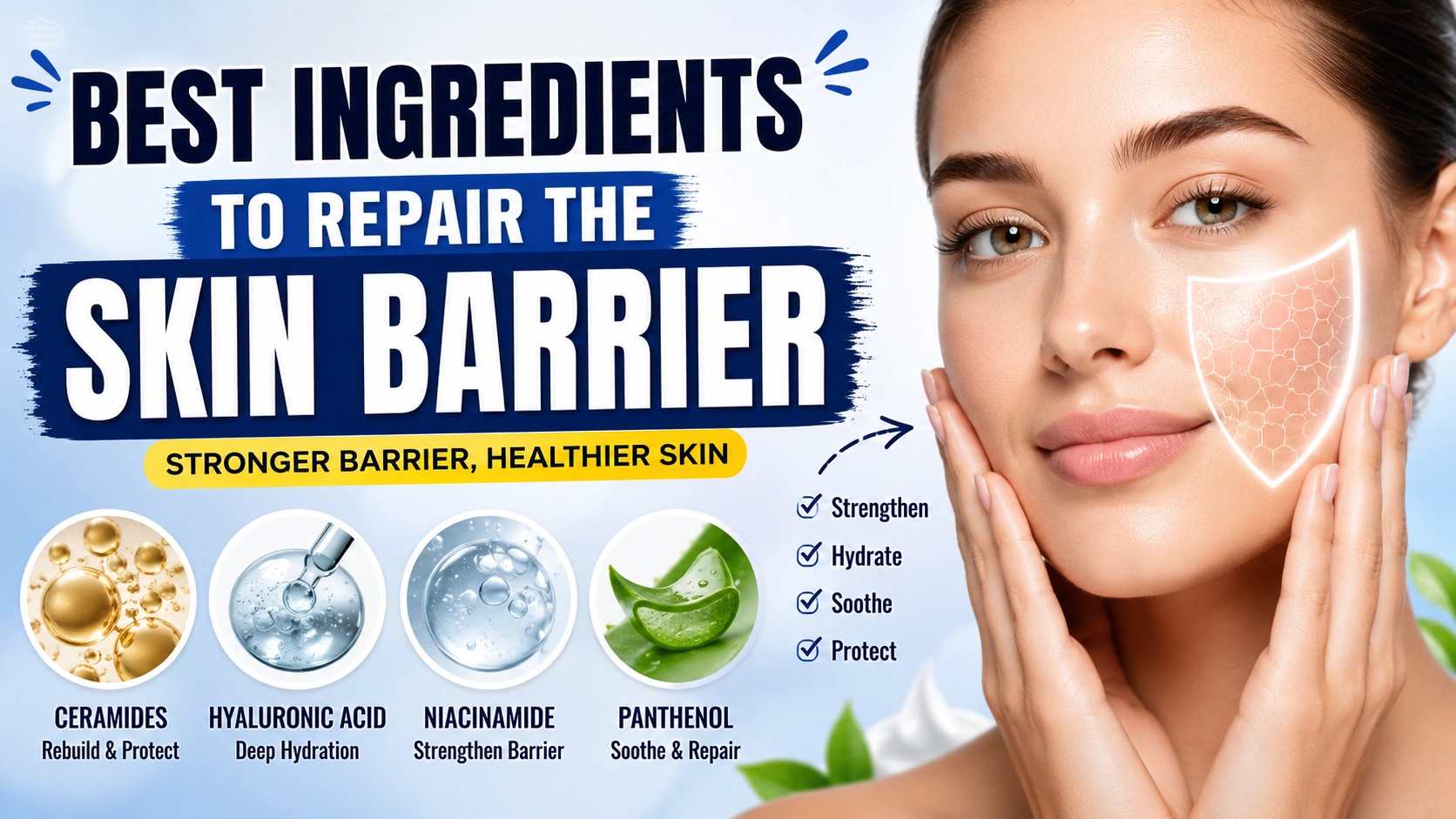
Best ingredients to repair the skin barrier are becoming one of the most searched skincare topics because a healthy skin barrier is the foundation of smooth, hydrated, and resilient skin. Whether your skin feels dry, irritated, oily, flaky, or unusually sensitive, the condition of your barrier often determines how your complexion looks and feels. Environmental stress, harsh cleansers, over-exfoliation, and excessive use of active ingredients can gradually weaken this protective shield.
Your skin barrier acts like a natural defense system that locks in moisture while preventing pollutants, allergens, and harmful bacteria from penetrating the skin. When this barrier becomes compromised, the skin loses water faster and becomes vulnerable to redness, irritation, and inflammation. Understanding What ingredients restore skin barrier? is the first step toward building an effective skincare routine that supports long-term skin health.
This guide explains the science behind skin barrier repair, the most effective ingredients supported by dermatology, and practical ways to strengthen your skin without making your routine overly complicated. You’ll also learn which habits damage the barrier and how to create a routine that promotes healthy, balanced skin.
Understanding the Skin Barrier
The outermost layer of your skin, known as the stratum corneum, works as a protective wall made of skin cells and natural lipids. These lipids consist primarily of ceramides, cholesterol, and fatty acids that hold skin cells together. When this structure remains intact, the skin stays hydrated, comfortable, and resistant to external aggressors throughout the day.
A damaged skin barrier struggles to retain moisture and defend against irritants. Instead of appearing smooth and healthy, the skin often becomes rough, tight, inflamed, and prone to breakouts. Even products that previously felt gentle may suddenly sting because the skin has become significantly more vulnerable to external exposure.
Signs Your Skin Barrier Needs Repair
A weakened barrier often develops gradually rather than overnight. Paying attention to early warning signs helps prevent more severe skin issues before they become difficult to manage.
- Persistent dryness that does not improve with regular moisturizer.
- Redness, burning, or stinging after applying skincare products.
- Increased sensitivity to weather changes and pollution.
- Tightness immediately after cleansing.
- Rough patches and flaky skin despite proper hydration.
- More frequent breakouts caused by irritation rather than excess oil.
- Skin looking dull and tired with uneven texture.
- Makeup settling into dry areas more than usual.
Recognizing these symptoms early allows you to simplify your skincare routine before additional damage occurs.
Why Skin Barrier Health Matters
Healthy skin is not simply about achieving a glowing appearance. A strong barrier performs several important biological functions that support overall skin wellness every day. When this protective layer remains intact, it reduces water loss, controls inflammation, maintains balanced oil production, and creates the ideal environment for skin renewal.
Poor barrier health often creates a cycle where dryness leads to irritation, irritation triggers inflammation, and inflammation weakens the barrier even further. Breaking this cycle requires patience, gentle skincare, and ingredients specifically chosen to support the skin’s natural repair mechanisms instead of overwhelming it with excessive treatments.
The Science Behind Barrier Repair
Skin naturally repairs itself, but this process slows when continuous damage exceeds the body’s ability to recover. Supporting the repair process means supplying ingredients that replace missing lipids, improve hydration, reduce inflammation, and strengthen the protective structure between skin cells.
Instead of chasing quick fixes, focus on rebuilding the barrier layer consistently over several weeks. Dermatologists generally recommend minimizing unnecessary products while prioritizing moisturizers, gentle cleansers, and barrier-supporting ingredients that encourage long-lasting skin resilience.
Ceramides: The Foundation of Barrier Repair
Ceramides are naturally occurring lipids that make up nearly half of the skin barrier’s structure. As people age or experience skin damage, ceramide levels decrease, leaving the barrier weaker and less capable of retaining moisture effectively.
Adding ceramide-rich skincare helps restore the protective lipid matrix, reducing moisture loss while improving softness and elasticity. Regular use supports healthier skin that feels stronger, calmer, and noticeably more comfortable even during harsh weather or seasonal changes.
Many dermatologists recommend moisturizers formulated with ceramides, such as La Roche-Posay Toleriane Double Repair Face Moisturizer, because they combine hydration with barrier-supporting ingredients designed for everyday use.
Niacinamide for Barrier Strength
Niacinamide, a form of vitamin B3, has become one of the most versatile skincare ingredients because it supports multiple aspects of skin health simultaneously. It encourages ceramide production, reduces inflammation, regulates oil production, and improves overall skin texture without causing excessive irritation.
People experiencing post-acne marks or uneven skin tone often benefit from formulations containing niacinamide alongside brightening ingredients. Products like La Roche-Posay Mela B3 Anti-Dark Spot Serum demonstrate how barrier support and skin tone improvement can work together within a balanced skincare routine.
Hyaluronic Acid for Deep Hydration
Hydration plays an essential role in repairing a compromised barrier because dehydrated skin struggles to heal efficiently. Hyaluronic acid attracts water into the skin, increasing moisture levels while improving flexibility and comfort throughout the day.
Unlike heavy oils, hyaluronic acid works well for nearly every skin type because it delivers hydration without leaving a greasy finish. When paired with moisturizers that seal in moisture, hydrated skin gradually becomes smoother, healthier, and more resistant to environmental stress.
Glycerin: An Everyday Hydration Hero
Glycerin remains one of the most reliable humectants in skincare due to its ability to attract water from both the environment and deeper skin layers. Consistent hydration helps maintain the skin barrier by preventing excessive dryness that often leads to irritation and microscopic cracks.
Because glycerin works gently, it fits easily into routines for dry, combination, oily, and sensitive skin alike. Many dermatologist-developed moisturizers include glycerin alongside ceramides and fatty acids to maximize long-term barrier recovery without increasing product complexity.
Panthenol Helps Calm Irritated Skin
Panthenol, also known as provitamin B5, offers both moisturizing and soothing properties. It supports skin repair by improving hydration while reducing redness associated with irritation. This ingredient becomes especially valuable after over-exfoliation, excessive retinol use, or prolonged environmental exposure.
When combined with gentle moisturizers and non-stripping cleansers, panthenol creates an environment where damaged skin can gradually recover without experiencing additional stress from aggressive skincare routines.
Gentle Cleansing Is the First Step
Many people unknowingly damage their skin barrier by using harsh cleansers that remove natural protective oils. Cleansing should eliminate dirt, sunscreen, and excess oil while preserving the lipids necessary for healthy barrier function.
A mild cleanser like La Roche-Posay Effaclar Purifying Foaming Gel effectively removes impurities without creating the uncomfortable tightness commonly associated with stronger cleansing formulas. Following cleansing with a nourishing moisturizer immediately helps reduce unnecessary moisture loss.
Ingredients That Work Better Together
Barrier repair becomes more effective when complementary ingredients work together rather than individually. Combining hydration, lipid replacement, and anti-inflammatory support creates an ideal environment for skin recovery.
- Ceramides strengthen the protective lipid barrier.
- Hyaluronic acid increases water retention.
- Glycerin continuously attracts moisture.
- Niacinamide boosts ceramide production.
- Panthenol reduces redness and discomfort.
- Cholesterol improves barrier flexibility.
- Fatty acids reinforce the skin’s natural structure.
- Squalane seals moisture without clogging pores.
Balanced formulations containing several of these ingredients often deliver more noticeable improvements than relying on a single active ingredient alone.
Avoid Over-Exfoliating During Recovery
One of the most common reasons barrier damage persists is continued overuse of exfoliating acids and physical scrubs. While exfoliation has benefits, damaged skin requires time to rebuild before additional exfoliation becomes appropriate again.
If exfoliation is necessary later, introduce it slowly and monitor how your skin responds rather than following aggressive schedules. Recovery periods should emphasize hydration, nourishment, and protection instead of rapid resurfacing treatments that may worsen irritation.
Supporting Your Barrier With Daily Moisturization
Daily moisturization replenishes the lipids and hydration lost throughout normal activities. Consistent use creates a protective layer that reduces transepidermal water loss while giving skin the resources needed to repair microscopic damage naturally.
People with dry or combination skin often benefit from lightweight yet nourishing formulations such as Vanicream Lite Lotion with Pump, especially when used immediately after cleansing while the skin remains slightly damp. This simple habit significantly improves moisture retention over time.
Fatty Acids Help Rebuild the Protective Layer
Healthy fatty acids play a major role in maintaining the skin’s lipid barrier. They fill the spaces between skin cells, helping prevent moisture loss while improving flexibility and softness. When the skin lacks essential fatty acids, it often feels rough, tight, and more susceptible to environmental damage throughout the day.
Skincare products containing balanced lipid blends can support long-term barrier recovery by restoring the natural composition of the outer skin layer. Rich moisturizers such as La Roche-Posay Lipikar AP+M Triple Repair Moisturizing Cream are commonly chosen for dry and compromised skin because they provide lasting nourishment without overwhelming the skin.
Cholesterol Supports Barrier Recovery
Cholesterol is another naturally occurring lipid that works alongside ceramides and fatty acids to keep the barrier intact. Although often overlooked, it contributes significantly to skin repair by reinforcing the protective structure that prevents excessive water evaporation and external irritation from affecting deeper skin layers.
When cholesterol is combined with other barrier-supporting ingredients, skin gradually becomes smoother, stronger, and more resilient. This balanced approach promotes healthier skin over time instead of delivering only temporary hydration that disappears shortly after application.
Squalane for Lightweight Nourishment
Squalane provides excellent moisturization without leaving a heavy or greasy finish, making it suitable for nearly every skin type. It mimics the skin’s natural oils, helping reinforce the barrier while maintaining softness and improving overall comfort after cleansing or exposure to harsh weather conditions.
People searching for the Best ingredients to repair the skin barrier for oily skin often appreciate squalane because it hydrates efficiently without clogging pores. Its lightweight texture allows oily and combination skin to remain balanced while receiving the nourishment necessary for effective barrier recovery.
Oat Extract Helps Calm Sensitive Skin
Colloidal oatmeal has long been recognized for its soothing properties. It reduces visible redness, relieves itching, and creates a protective layer that supports healing without introducing unnecessary irritation. Sensitive skin often responds well to oatmeal because it strengthens the barrier while maintaining comfortable hydration throughout the day.
Individuals looking for Skin barrier repair products for sensitive skin should prioritize gentle formulas containing calming ingredients rather than highly concentrated active treatments. A simplified routine consistently delivers better long-term results than constantly changing skincare products in search of immediate improvement.
Aloe Vera Supports Natural Recovery
Natural botanical ingredients can complement scientifically proven barrier-repair ingredients when used appropriately. Aloe Vera delivers lightweight hydration while providing soothing properties that help reduce temporary irritation caused by environmental exposure, dryness, or excessive cleansing without making the skin feel heavy afterward.
Many people researching Natural ingredients to repair skin barrier appreciate aloe because it hydrates gently and helps calm visible discomfort. However, natural ingredients should still be combined with moisturizers containing barrier-supporting lipids to achieve more complete and sustainable skin recovery over time.
Petroleum Jelly Prevents Moisture Loss
Occlusive ingredients help seal hydration inside the skin after moisturizing. They create a protective layer that minimizes water evaporation, allowing damaged skin to repair itself more efficiently during both daytime and overnight recovery periods.
A classic example is Vaseline Blueseal Pure Petroleum Jelly, which is frequently applied as the final skincare step over moisturizer. This technique helps retain hydration and supports healing, particularly for extremely dry areas that lose moisture rapidly throughout the day.
Nighttime Repair Matters More Than You Think
Skin naturally performs much of its repair process while you sleep. Providing adequate hydration before bedtime creates ideal conditions for overnight recovery, allowing barrier-supporting ingredients to work without constant exposure to sunlight, pollution, or environmental stressors.
Many people include CeraVe Skin Renewing Night Cream as part of their evening routine because overnight moisturization helps replenish lipids while maintaining comfortable hydration until morning. Consistency every night generally produces better results than applying multiple products inconsistently.
Cleansing Without Compromising the Barrier
Gentle cleansing remains important even during barrier repair because dirt, sunscreen, and pollution accumulate throughout the day. However, cleansers should preserve natural moisture rather than stripping protective oils from the skin’s surface.
A nourishing cleanser such as La Roche-Posay Lipikar AP+ Gentle Foaming Moisturizing Wash removes impurities while helping maintain hydration. This balanced cleansing approach supports barrier recovery instead of creating additional dryness that delays the healing process.
Daily Sun Protection Prevents Further Damage
Ultraviolet radiation weakens the skin barrier by increasing inflammation and accelerating moisture loss. Even the most effective skincare routine becomes less successful if daily sun protection is ignored, especially during extended outdoor exposure.
Lightweight formulations like La Roche-Posay Anthelios Sunscreen UVMUNE400 Oil Control Gel Cream SPF50+ provide high sun protection while remaining comfortable for everyday wear. Consistent sunscreen use helps preserve barrier improvements achieved through moisturizing and gentle skincare practices.
Habits That Slow Barrier Recovery
Many everyday skincare mistakes prevent the barrier from healing even when quality products are being used consistently. Eliminating these habits often speeds recovery more effectively than continuously purchasing new skincare products.
- Washing the face too frequently.
- Using very hot water during cleansing.
- Layering multiple strong active ingredients together.
- Picking or scratching irritated skin.
- Skipping moisturizer after cleansing.
- Frequently changing skincare routines.
- Ignoring sunscreen during daytime.
- Overusing physical exfoliating scrubs.
Understanding What destroys the skin barrier? helps prevent repeated damage while allowing your skin sufficient time to rebuild naturally.
Simple Lifestyle Changes That Support Healthy Skin
Healthy skin reflects both skincare habits and overall lifestyle choices. Daily nutrition, hydration, stress management, and sleep quality influence how efficiently the body repairs damaged skin tissues and maintains a resilient barrier.
Drinking enough water, eating foods rich in healthy fats, minimizing unnecessary stress, and maintaining regular sleep patterns create an environment where barrier-supporting skincare ingredients can perform more effectively over the long term.
A Gentle Routine Works Better Than an Aggressive One
Many people wonder How do I repair my skin barrier fast? Although everyone hopes for rapid improvement, barrier recovery usually requires consistency rather than aggressive treatment. Simplifying your skincare routine often delivers faster visible improvement than adding multiple new products at once.
Start with a gentle cleanser, apply a hydrating serum if needed, use a nourishing moisturizer, and finish with sunscreen during the daytime. Following these fundamental steps consistently gives your skin the best opportunity to recover without unnecessary irritation.
Choosing Products for Different Skin Types
Every skin type requires barrier support, but product textures should match individual needs. Heavy creams benefit extremely dry skin, while lightweight lotions and gel creams work well for oily or combination complexions without creating excessive shine.
People searching for Skin barrier repair products should focus on ingredient quality rather than marketing claims. Those specifically seeking Skin barrier repair products for Face should prioritize moisturizers and cleansers that reinforce the skin barrier instead of relying solely on cosmetic improvements.
Gentle Treatments Instead of Harsh Exfoliation
Physical scrubs can worsen existing irritation when the barrier is already compromised. For example, L’Oreal Paris Men Expert Pure Carbon Anti-Blackhead Daily Face Scrub may be appropriate only after the skin barrier has recovered fully, rather than during periods of active sensitivity or inflammation.
Similarly, products containing stronger exfoliating ingredients should always be introduced gradually once the barrier becomes healthy again. Protecting recovery remains more important than chasing immediate visible improvements through frequent exfoliation.
Brightening and Barrier Repair Can Work Together
A healthy barrier improves the skin’s ability to tolerate targeted treatments for uneven pigmentation and post-inflammatory marks. Gentle cleansers such as La Roche-Posay Mela B3 Anti-Dark Spots Face Wash can complement a balanced skincare routine without replacing essential moisturization and barrier-supporting ingredients.
Likewise, exfoliating toners including La Roche-Posay Effaclar Clarifying Solution should only be introduced carefully after the skin demonstrates consistent signs of recovery. Gradual use minimizes unnecessary irritation while maintaining overall skin comfort.
Don’t Forget Lips and Small Dry Areas
The skin barrier extends beyond the face, making targeted care important for delicate areas exposed to constant environmental stress. Dry lips, cracked corners of the mouth, and localized rough patches often require specialized protective products alongside facial skincare.
Products such as La Roche-Posay Cicaplast Multicolor Lip Barrier Repairing Balm help maintain hydration on delicate lip skin, while Vaseline Blueseal Rich Conditioning Jelly Cocoa Butter provides additional nourishment for rough areas needing prolonged moisture retention.
Daily Protection Maintains Long-Term Results
Once your barrier begins recovering, maintaining those improvements becomes equally important. Lightweight daily sunscreen like La Roche-Posay Anthelios Sunscreen UVMUNE400 Invisible Fluid SPF50 shields the skin against environmental stress while reducing future barrier damage caused by ultraviolet exposure.
When occasional irritation does occur, soothing recovery creams such as La Roche-Posay Cicaplast Baume B5 Creme can provide additional comfort by supporting the skin’s natural healing process without disrupting the balanced routine you’ve already established.
Building a Sustainable Routine
People often ask Which chemical is best for skin barrier repair? There is no single miracle ingredient because healthy skin depends on multiple components working together. Ceramides, cholesterol, fatty acids, glycerin, panthenol, niacinamide, hyaluronic acid, and squalane each contribute unique benefits that strengthen the barrier over time.
Others also wonder What is the best product to repair the skin barrier? The answer depends on your skin type, existing concerns, and the consistency of your routine. Choosing products with proven barrier-supporting ingredients generally delivers better long-term outcomes than chasing short-lived skincare trends.
Finally, some individuals prefer learning How to repair skin barrier without products by avoiding harsh cleansers, reducing exfoliation, protecting skin from excessive sun exposure, maintaining hydration, eating a nutrient-rich diet, and allowing the skin adequate time to restore itself naturally.
Conclusion
A healthy skin barrier is the foundation of every successful skincare routine because it protects against moisture loss, environmental damage, and irritation while supporting smoother, stronger, and healthier-looking skin. Rather than searching for instant results, focus on gentle cleansing, daily moisturization, consistent sun protection, and scientifically supported ingredients that encourage gradual repair.
By choosing the best ingredients to repair the skin barrier and maintaining simple, consistent skincare habits, you can improve hydration, reduce sensitivity, and strengthen your skin’s natural defenses for lasting results. Healthy skin is built through patience and consistency, making barrier repair one of the most valuable investments you can make in your long-term skincare routine.