Healthy skin is not only about using expensive skincare products. The real secret lies in understanding what your skin lacks and selecting products that solve that specific concern. One of the most common skincare discussions today revolves around Moisturizer vs Hydrating Cream because many people assume these products perform the same function. While they may seem similar, they actually work in different ways and offer unique benefits.
Modern skincare routines focus heavily on hydration, barrier repair, and long-term skin health. As a result, understanding the difference between a moisturizer and a hydrating cream has become essential for anyone looking to achieve soft, smooth, and healthy-looking skin. Choosing the wrong product can leave your skin feeling uncomfortable, while selecting the right one can significantly improve texture, radiance, and overall skin condition.
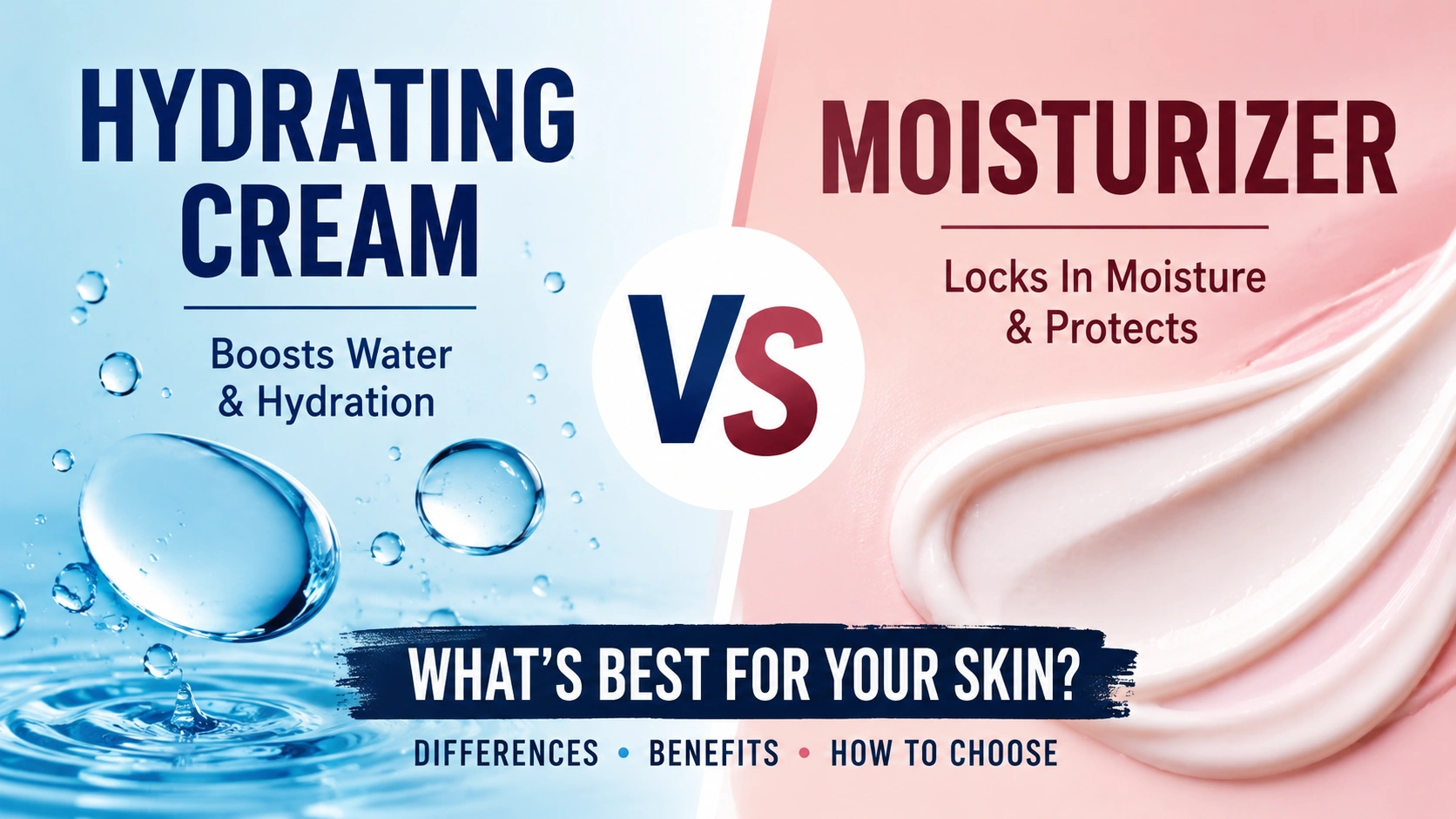
When comparing Moisturizer vs Hydrating Cream, the key difference comes down to what the skin is lacking. Some skin lacks water, while other skin lacks oil. Identifying which issue you are dealing with can transform the effectiveness of your skincare routine.
Why the Difference Between Moisture and Hydration Matters
Many people describe their skin as dry when it is actually dehydrated. Although the symptoms can appear similar, these are two separate concerns that require different solutions.
Hydration refers to the amount of water present within the skin cells. When skin becomes dehydrated, it often looks tired, feels tight, and may lose its natural glow. Moisture, on the other hand, refers to the oils and lipids that keep hydration locked inside the skin.
This distinction is what makes Moisturizer vs Hydrating Cream such an important topic. Hydrating creams help increase water levels in the skin, while moisturizers help prevent that water from escaping.
Without proper hydration, the skin can appear dull and stressed. Without sufficient moisture, hydration quickly evaporates, leaving the skin feeling rough and uncomfortable. The healthiest skin typically requires a balance of both.
What Exactly Is a Hydrating Cream?
A hydrating cream is designed to increase the water content of the skin. These products typically contain ingredients that attract and bind water to the skin, helping it appear plumper and more refreshed.
Hydrating creams are especially beneficial for people whose skin feels tight despite looking oily. Dehydration can affect every skin type, including oily and combination skin. Rather than creating a protective barrier, hydrating products focus on delivering water to thirsty skin cells.
Benefits of Hydrating Creams
- Improve skin softness and suppleness
- Increase water retention
- Reduce dehydration-related fine lines
- Enhance skin radiance
- Improve skin elasticity
- Provide a lightweight feel
People experiencing dullness, tightness, or uneven texture often notice visible improvements after introducing hydrating products into their routine.
Among the most popular hydration-focused products are Vichy Mineral 89 Hyaluronic Acid Serum, La Roche-Posay Hyalu B5 Serum, and La Roche-Posay Mela B3 Anti-Dark Spot Serum. These formulations help replenish hydration while supporting smoother and healthier-looking skin.
The growing interest in Moisturizer vs Hydrating Cream stems largely from the realization that hydration is not only for dry skin. Even oily skin can become severely dehydrated.
What Is a Moisturizer?
A moisturizer serves a different purpose. Instead of delivering water into the skin, it helps retain hydration by reinforcing the skin barrier. Moisturizers contain ingredients that soften the skin and reduce moisture loss. They create a protective layer that prevents water from evaporating throughout the day.
This protective action is particularly important for people with naturally dry skin, mature skin, or compromised skin barriers.
Benefits of Moisturizers
- Lock in hydration
- Strengthen the skin barrier
- Reduce roughness
- Improve skin comfort
- Minimize flaking
- Support long-term skin health
Products such as La Roche-Posay Lipikar AP+M Triple Repair Moisturizing Cream and La Roche-Posay Lipikar Balm AP+ Body Cream are excellent examples of moisturizers designed to provide deep nourishment and long-lasting comfort.
For daily facial care, many skincare enthusiasts prefer La Roche-Posay Toleriane Double Repair Face Moisturizer, while those seeking UV protection often choose La Roche-Posay Toleriane Double Repair Face Moisturizer SPF 30.
Individuals who prefer a shine-free finish frequently gravitate toward La Roche-Posay Toleriane Double Repair Matte Face Moisturizer because it provides hydration without excessive heaviness. Understanding these functions is essential when evaluating Moisturizer vs Hydrating Cream, as each product addresses a different skincare need.
Moisturizer vs Hydrating Cream: The Core Difference
The easiest way to understand Moisturizer vs Hydrating Cream is by thinking about water versus protection. The hydrating cream increases water levels inside the skin. A moisturizer helps keep that water from escaping.
Hydration focuses on replenishment, while moisture focuses on preservation. Many skincare professionals recommend using both because they work together rather than competing against one another. Applying hydration without moisture can lead to quick water loss. Using moisture without hydration may not adequately address dehydration.
The best skincare routines often combine both approaches to create healthy, balanced skin.
Signs Your Skin Needs More Hydration
Dehydration is one of the most overlooked skincare concerns because its symptoms are frequently mistaken for dryness.
Common Signs of Dehydrated Skin
- Tightness after washing
- Dull appearance
- Fine lines becoming more visible
- Rough texture
- Temporary redness
- Excess oil production
- Lack of radiance
When the skin lacks water, it often attempts to compensate by producing additional oil. This is why oily skin can still feel uncomfortable and dehydrated.
Gentle cleansing is essential for maintaining hydration levels. Products such as La Roche-Posay Toleriane Hydrating Gentle Cleanser and La Roche-Posay Toleriane Hydrating Gentle Facial Cleanser effectively remove impurities while helping preserve hydration.
These cleansers pair well with hydration-focused routines designed around the principles of Moisturizer vs Hydrating Cream.
Signs Your Skin Needs More Moisture
Unlike dehydration, dryness is considered a skin type rather than a temporary condition. Dry skin lacks natural oils and struggles to maintain a healthy barrier. As a result, moisture escapes more easily.
Common Signs of Dry Skin
- Persistent flaking
- Rough patches
- Itching
- Long-lasting tightness
- Increased sensitivity
- Irritated skin barrier
For these concerns, moisturizers often play a larger role than hydrating products.
Many dermatologists recommend Vanicream Skin Cream Pharmaceutical Specialties because of its gentle formulation and ability to provide long-lasting nourishment without irritating sensitive skin.
Another popular option is Vanicream Moisturizing Skin Cream with Pump Dispenser, which delivers rich moisture while remaining suitable for daily use.
Those seeking a lighter texture may prefer Vanicream Lite Lotion with Pump, which offers comfortable hydration without feeling overly heavy.
The discussion around Moisturizer vs Hydrating Cream becomes especially relevant for people experiencing both dryness and dehydration simultaneously.
Is hydrating cream the same as moisturizer?
This is one of the most frequently asked skincare questions.
The simple answer is no.
Hydrating creams are formulated to increase water content within the skin, whereas moisturizers help retain that hydration by supporting the skin barrier.
Although some modern products provide both benefits, their primary functions remain different.
Understanding this distinction allows consumers to select products more effectively and build routines tailored to their individual needs.
Ingredients That Separate Hydration From Moisture
One of the easiest ways to understand Moisturizer vs Hydrating Cream is by examining ingredient lists. Hydrating products typically contain humectants that attract water. Moisturizers generally contain emollients and occlusive ingredients that help prevent water loss.
Common Hydrating Ingredients
- Hyaluronic acid
- Glycerin
- Sodium PCA
- Aloe vera
- Panthenol
- Thermal water
These ingredients help draw water into the skin and improve overall hydration levels.
Common Moisturizing Ingredients
- Ceramides
- Shea butter
- Squalane
- Fatty acids
- Dimethicone
- Plant oils
These ingredients reinforce the protective barrier and improve moisture retention.
The evolution of skincare technology has resulted in many hybrid products that combine both ingredient categories, making Moisturizer vs Hydrating Cream less about choosing one and more about understanding how each contributes to skin health.
Is a hydrating cream a moisturizer?
A hydrating cream can sometimes provide moisturizing benefits, but it is not automatically considered a moisturizer. Its primary purpose remains increasing water levels within the skin. A true moisturizer focuses on sealing hydration and supporting the skin barrier.
Some advanced formulations combine both functions, which is why reading ingredient lists and understanding product claims has become increasingly important. In the next part, we will explore Moisturizer vs hydrating cream for dry skin, Moisturizer vs hydrating cream for oily skin, Face moisturizer vs hydrating cream, Moisturizer vs hydrating cream for acne prone skin, proper layering techniques, Hydrator or moisturizer first, complete skincare routines, and expert recommendations for achieving balanced and healthy skin.
By now, it is clear that hydration and moisture are not identical concepts. The next step is understanding how these products fit into different skincare routines and how your skin type influences the choice between them.
The discussion surrounding Moisturizer vs Hydrating Cream becomes even more important when dealing with concerns such as excessive oiliness, persistent dryness, acne breakouts, environmental damage, and aging. Different skin conditions require different approaches, and applying the wrong product may prevent you from achieving the results you want.
Instead of asking which product is universally better, the smarter question is which product best addresses your current skin condition.
Moisturizer vs hydrating cream for dry skin
People with dry skin often experience tightness throughout the day, visible roughness, flaky patches, and increased sensitivity. Because dry skin naturally produces less oil, it struggles to keep moisture trapped within the skin barrier.
In the comparison of Moisturizer vs hydrating cream for dry skin, moisturizers generally play a larger role because they provide the lipids and barrier support that dry skin lacks. However, relying exclusively on a moisturizer may not fully address dehydration if the skin is also lacking water.
The most effective strategy often involves combining hydration and moisture. A hydrating product replenishes water levels, while a moisturizer prevents that hydration from escaping. When used consistently, this combination helps improve comfort, softness, and resilience against environmental stressors.
Moisturizer vs hydrating cream for oily skin
One of the biggest skincare myths is that oily skin does not need hydration or moisture. In reality, oily skin frequently becomes dehydrated.
Harsh cleansers, over-exfoliation, excessive sun exposure, and environmental factors can strip water from the skin. As a response, the skin may produce even more oil to compensate.
When discussing Moisturizer vs hydrating cream for oily skin, lightweight hydrating products often become especially valuable because they restore water content without adding heaviness.
Oily skin can also benefit from lightweight moisturizers that support the skin barrier without creating a greasy finish. Proper hydration frequently helps regulate oil production and improves overall skin balance. Individuals with oily skin should prioritize non-comedogenic products and avoid unnecessarily heavy formulations that may contribute to congestion.
Face moisturizer vs hydrating cream
The comparison of Face moisturizer vs hydrating cream often confuses skincare beginners because both products can leave the skin feeling softer and smoother.
The distinction lies in how they achieve that result. Hydrating creams work by attracting water into the skin and improving hydration levels. Moisturizers focus on sealing hydration inside the skin while supporting the skin barrier.
A face moisturizer is often richer and more protective, whereas hydrating creams typically feel lighter and more refreshing. Many dermatologists recommend using both products because they serve complementary roles rather than competing functions. Together, they help create healthier-looking skin with improved texture and elasticity.
Moisturizer vs hydrating cream for acne prone skin
Acne-prone skin presents unique challenges because many individuals fear that additional skincare products may worsen breakouts.
However, dehydration and barrier damage can actually contribute to acne-related concerns. When the skin becomes dehydrated, it may increase oil production, potentially leading to clogged pores and blemishes.
This is why discussions about Moisturizer vs hydrating cream for acne prone skin are so relevant.
Hydrating products help maintain adequate water levels, while lightweight moisturizers support barrier function and reduce irritation caused by acne treatments.
The goal is not to avoid hydration or moisture but rather to choose formulas specifically designed for acne-prone skin. Maintaining a healthy barrier often helps reduce redness, discomfort, and post-breakout sensitivity.
Hydrator or moisturizer first?
One of the most common skincare layering questions is Hydrator or moisturizer first.
The answer depends on product function. Hydrating products should generally be applied before moisturizers because hydration-focused ingredients need direct contact with the skin to attract and retain water effectively.
Once hydration has been delivered, a moisturizer can be applied to help seal everything in place and minimize water loss throughout the day. This sequence allows both products to perform their intended roles efficiently and maximizes their overall effectiveness.
Creating an Effective Morning Routine
A successful morning skincare routine focuses on protection, hydration, and maintaining skin comfort throughout the day. Start with a gentle cleanser to remove overnight oil, sweat, and impurities. Follow with a hydrating product if your skin experiences dehydration or tightness.
After hydration, apply a moisturizer that supports barrier health and helps maintain hydration throughout the day. Daily sun protection should always be the final skincare step before makeup.
Among products that can complement a complete daytime routine, La Roche-Posay Cicaplast Baume B5 Creme is frequently chosen by individuals seeking additional barrier support and comfort for stressed or irritated skin. Consistency is far more important than complexity. A simple routine followed daily often produces better results than an overly complicated routine used inconsistently.
Building an Effective Night Routine
Nighttime offers an opportunity for recovery and restoration.
During sleep, the skin naturally undergoes repair processes. Supporting these functions with proper hydration and moisture can contribute to healthier-looking skin over time.
After cleansing, hydration-focused products can help restore water levels lost throughout the day. A moisturizer applied afterward helps maintain that hydration while supporting overnight recovery.
Individuals dealing with uneven skin texture or post-acne marks may incorporate targeted products such as La Roche-Posay Anti-Marks Cream Gel as part of a comprehensive evening routine. The most important factor is consistency. Visible improvements typically occur gradually rather than overnight.
The Influence of Environment on Skin Hydration
Environmental conditions play a major role in determining whether the skin needs additional hydration, moisture, or both. Cold temperatures, indoor heating systems, low humidity, and excessive sun exposure can all accelerate moisture loss.
Even people who normally have balanced skin may notice increased tightness or dryness during seasonal transitions. Recognizing these changes allows you to adjust your routine accordingly rather than continuing with products that no longer meet your skin’s current needs.
The more you understand these influences, the easier it becomes to make informed decisions regarding Moisturizer vs Hydrating Cream.
Why Skin Barrier Health Matters
The skin barrier acts as a protective shield against external irritants, pollution, allergens, and moisture loss. When the barrier becomes compromised, the skin may appear dull, irritated, and more reactive.
Supporting barrier health requires both hydration and moisture. Hydration helps maintain water balance, while moisturizers strengthen the protective layer that prevents excessive water loss. Barrier-focused skincare has become increasingly popular because healthy skin barriers are associated with improved comfort, resilience, and long-term skin health.
Additional Skincare Products That Complement Hydration and Moisture
Hydration and moisture form the foundation of skincare, but additional products can further support skin health depending on individual concerns.
Men seeking a lightweight daily skincare option may find L’Oreal Paris Men Expert Hydra Energetic Face Cream useful for maintaining hydration while promoting a fresher appearance.
Daily sun protection is equally important because ultraviolet exposure accelerates moisture loss and contributes to premature aging.
La Roche-Posay Anthelios Sunscreen UVMUNE400 Oil Control Gel Cream SPF50+ helps provide broad-spectrum protection while supporting a comfortable finish suitable for daily wear.
Integrating supportive products into a routine can enhance overall skincare results without replacing the need for proper hydration and moisture.
Common Mistakes That Prevent Better Results
Many people unknowingly undermine their skincare efforts through habits that weaken hydration levels and damage the skin barrier.
Some of the most common mistakes include:
- Over-cleansing the skin
- Using overly aggressive exfoliants
- Skipping moisturizer because of oily skin
- Ignoring sunscreen
- Applying products in the wrong order
- Constantly switching skincare products
- Expecting immediate results
Avoiding these mistakes often leads to noticeable improvements in skin comfort and appearance.
Final Thoughts on Moisturizer vs Hydrating Cream
The debate surrounding Moisturizer vs Hydrating Cream is not about determining a winner. Instead, it is about understanding what your skin truly requires.
Hydrating creams increase water levels within the skin and help improve plumpness, smoothness, and overall radiance. Moisturizers help preserve that hydration while strengthening the skin barrier and preventing moisture loss.
For many individuals, the ideal skincare routine includes both products because hydration and moisture work together to support healthier skin.
Whether your concern is dryness, dehydration, sensitivity, oiliness, or aging, understanding the distinction between hydration and moisture allows you to make more informed skincare decisions.
When used correctly and consistently, both product types contribute to softer, healthier, and more resilient skin that looks and feels its best throughout the year.
Frequently Asked Questions
Do oily skin types need moisturizers?
Yes. Moisturizers help maintain barrier health and prevent the skin from overcompensating by producing excess oil.
Can hydrating creams replace moisturizers?
Not always. Hydrating creams provide water, while moisturizers help retain it. Many people benefit from using both.
How often should these products be applied?
Most individuals achieve the best results by applying them twice daily as part of a morning and evening skincare routine.
Can dehydrated skin become oily?
Yes. Dehydrated skin often increases oil production as a response to water loss.
Are hydration and moisture important for mature skin?
Absolutely. Both functions help improve comfort, elasticity, and the overall appearance of aging skin.